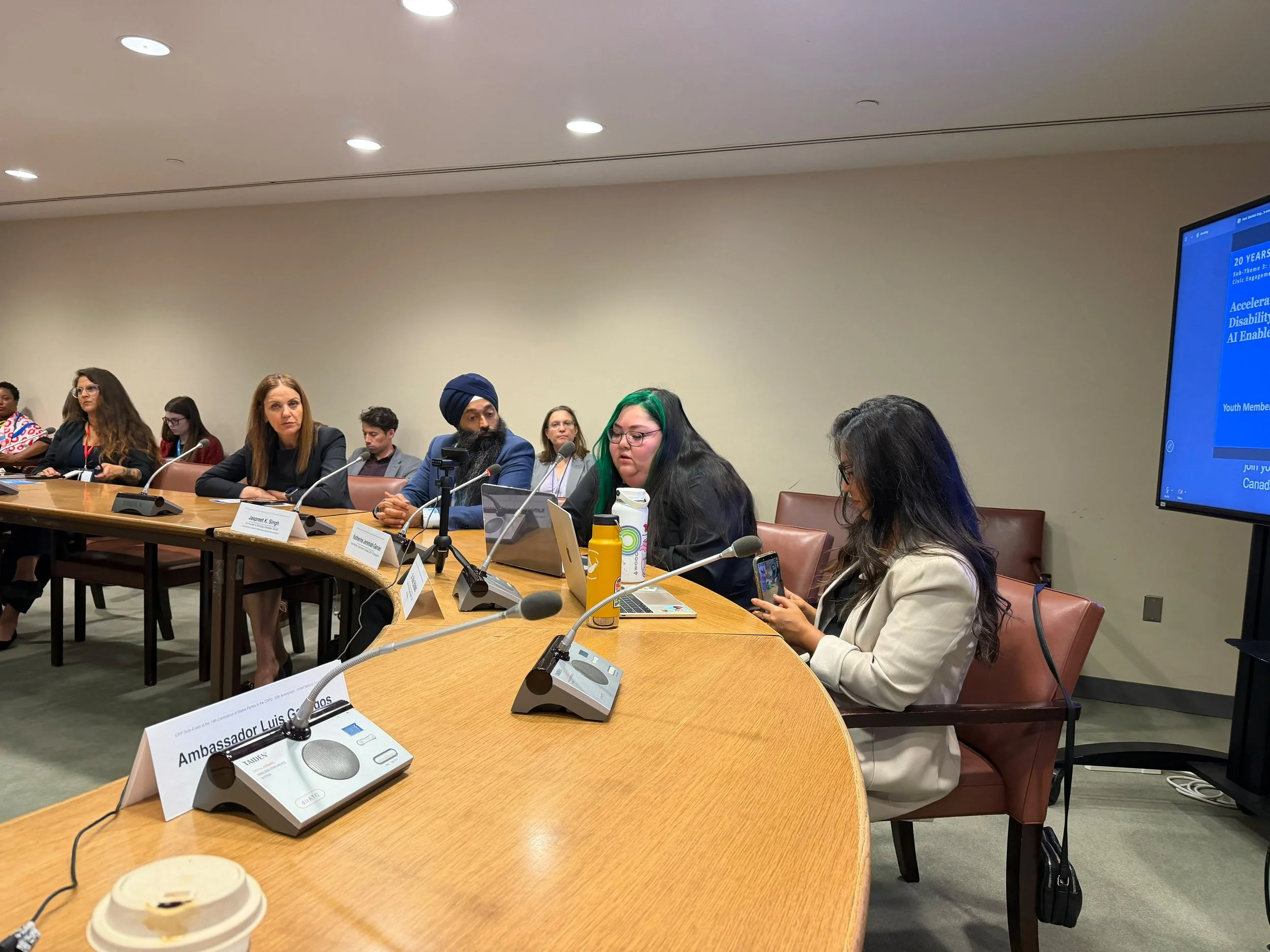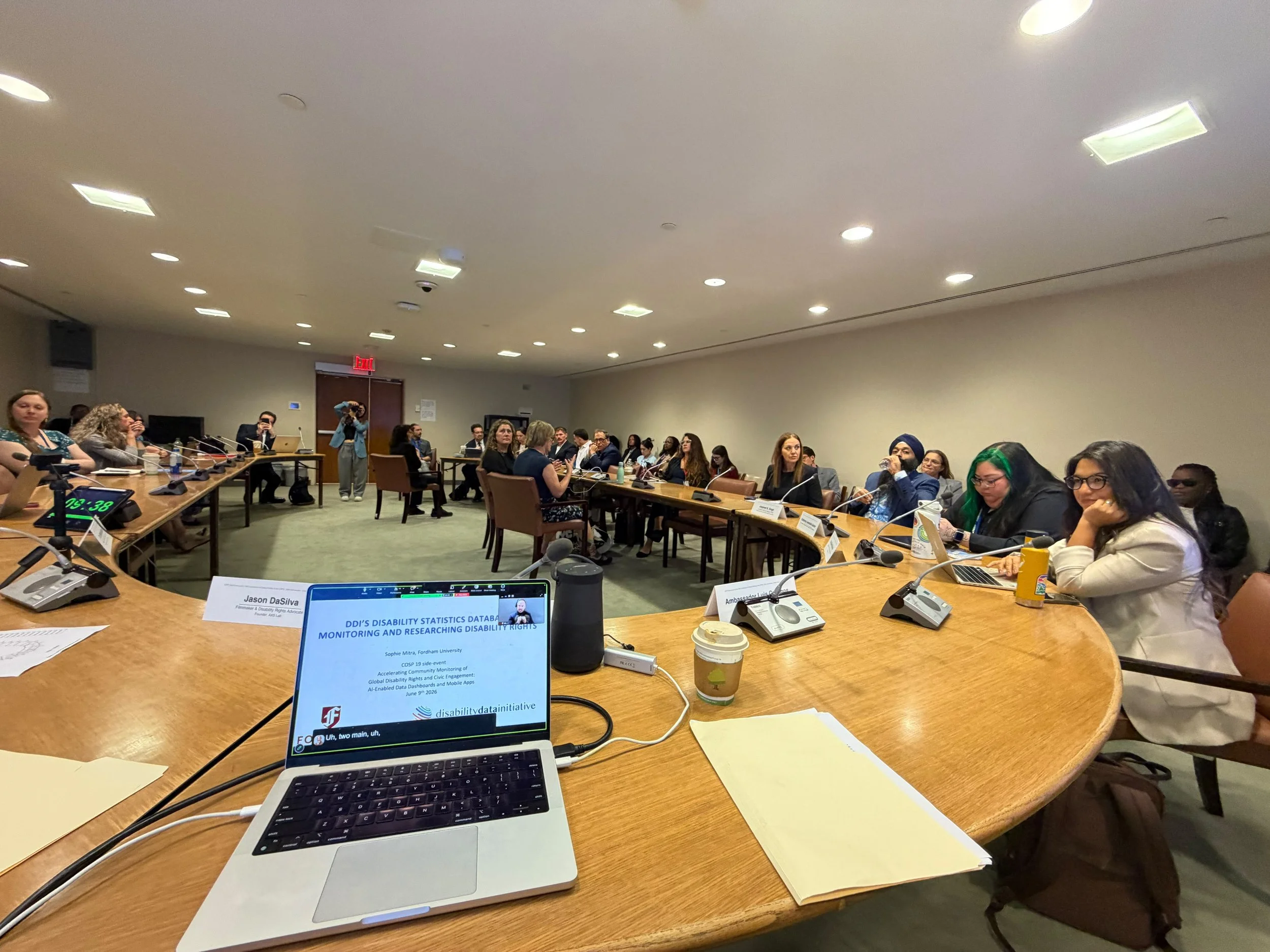
On Tuesday, 9 June 2026, the Institute on Disability and Public Policy (IDPP) led an expert panel during the 19th United Nations Conference of States Parties (COSP) to the Convention on the Rights of Persons with Disabilities (CRPD). Entitled: “Accelerating Community Monitoring of Global Disability Rights and Civic Engagement: AI-Enabled Data Dashboards and Mobile Apps”, the side event was sponsored by the Government of Canada. In addition to the leadership of IDPP, the side-event was co-sponsored by a variety of organizations at American University, including the UNESCO Associate Chair in Transnational Challenges and Governance, the Inclusive Technology and Policy Strategic Research Initiative, the Internet Governance Lab, the Kogod School of Business, and the School of International Service. At McGill University, the Canada Research Chair in Childhood Disability served as co-sponsor. The Disability Data Initiative at Fordham University also served as a co-sponsor, along with AXS Lab, Inc. The side event focused on enhancing community engagement and monitoring the implementation of the Convention on the Rights of Persons with Disabilities (CRPD) through various data-driven tools. Several presentations highlighted the importance of accessible data, quality inclusion policies, and the role of technology in improving accessibility. The discussions covered the utility of AI-enabled capabilities and the importance of knowledge translation tools for empowering nontechnical users.
In support of Sub-theme 3 (From Participation to Representation), the overarching goal of the side-event was to showcase how AI-enabled data dashboards can provide communities with powerful, accessible tools for monitoring and evaluating progress toward CRPD implementation. This side-event featured the re-launch of the updated CRPD mobile application and the launch of the integrated CRPD Disability Rights Data Dashboard. The event also highlighted complementary data approaches—accessibility mapping, crowd-sourced recreation data, and socio-economic indicators—that enhance the ability of Organizations for Persons with Disabilities (OPDs) to assess CRPD implementation globally, regionally, and nationally.
The side-event began with welcome remarks from Ambassador Luis Gallegos, President Boards of WID and GIA-Longevity; Senior Advisor, Nippon Foundation; and Chair, Joint Advisory Board, Institute on Disability and Public Policy (IDPP), American University. He noted the achievement of the CRPD, but emphasized the need to accelerate the transition from participation to representation and, in the process, reflected on the analytical power of AI-driven tools to marshal evidence to enhance community monitoring.
Next, the opening address was delivered by Kat, a Youth Member of the Canadian Government COSP-19 Delegation. In their presentation, they emphasized the significance of disabled youth in monitoring and civic engagement in CRPD implementation, highlighting how accessible data tools can support the shift from participation to the representation of persons with disabilities. They emphasized that discussions about accessibility and inclusion must be cognizant of geographic privileges, because disability rights are human rights that must be translated into everyday experiences.
Following the opening addresses, the side event moved to five presentations by world-renowned panelists. Each presenter showcased complementary data approaches that enhance the analytical capabilities available to OPDs and civil society. Connecting the events was how data-driven tools can enhance accessible civic engagement, strengthen disability leadership and advocacy, and support the transition from participation to meaningful representation in political and public life.
Topic 1 on “Moving from expert-mediated treaty analysis to community-accessible evidence infrastructure” was led by Dr. Derrick L. Cogburn, Professor of Information Technology & Analytics and Environment, Development & Health at American University’s School of International Service and Kogod School of Business, and Executive Director of IDPP. During the session, Dr. Cogburn publicly launched the CRPD Dashboard Launch and highlighted the relaunch of the Mobile App. His presentation focused on how the natural language processing (NLP) and retrieval-augmented generation (RAG) AI approach incorporated in the CRPD Data Dashboard can make the entire treaty reporting cycle visual and accessible for analysis by disability rights advocates. He then conducted a live presentation of the different features and analytical approach enabled by the dashboard.
Topic 2 on “AI-Driven Recreation Data for Children with Disabilities” was presented by Dr. Keiko Shikako, Associate Professor and Canada Research Chair in Childhood Disability: Participation and Knowledge Translation at McGill University. She presented on how AI-driven, crowd-sourced recreation data can address recreational inequities and empower children with disabilities to engage in community programs. Dr. Shikako expanded on how knowledge translation tools empower nontechnical users, including advocates for children with disabilities.
Topic 3 on “AXS Map — Accessibility Through AI ” was presented by Jason DaSilva, Filmmaker, Disability Rights Advocate, Founder of AXS Lab. Jason discussed how Access Map, a platform that helps users find accessible locations globally, is leveraging AI to advance accessibility. He expanded on how Access Maps has leveraged AI to reduce friction for people with disabilities in accessing accessibility information through AI-powered voice reviews. With AI providing an opportunity to rethink how inculsiivty is incorporated, Jason focused on how Access Maps is working toward a future where people with disabilities can participate more fully, more independently, and more visibly in public.
Topic 4 on “Socio-Economic Disability Data Dashboard” was presented by Dr. Sophie Mitra, Professor of Economics at Fordham University, Founding Director of the Research Consortium on Disability, and PI Disability Data Initiative. Her presentation focused on the Disability Data Initiative and its online databases. In her presentation, Dr. Mitra highlighted the DDI online dashboard and examined how socio-economic data can reveal the economic hurdles and prospects for individuals with disabilities across the globe. She further addressed the complexities associated with gathering data and enacting policies within the Global South.
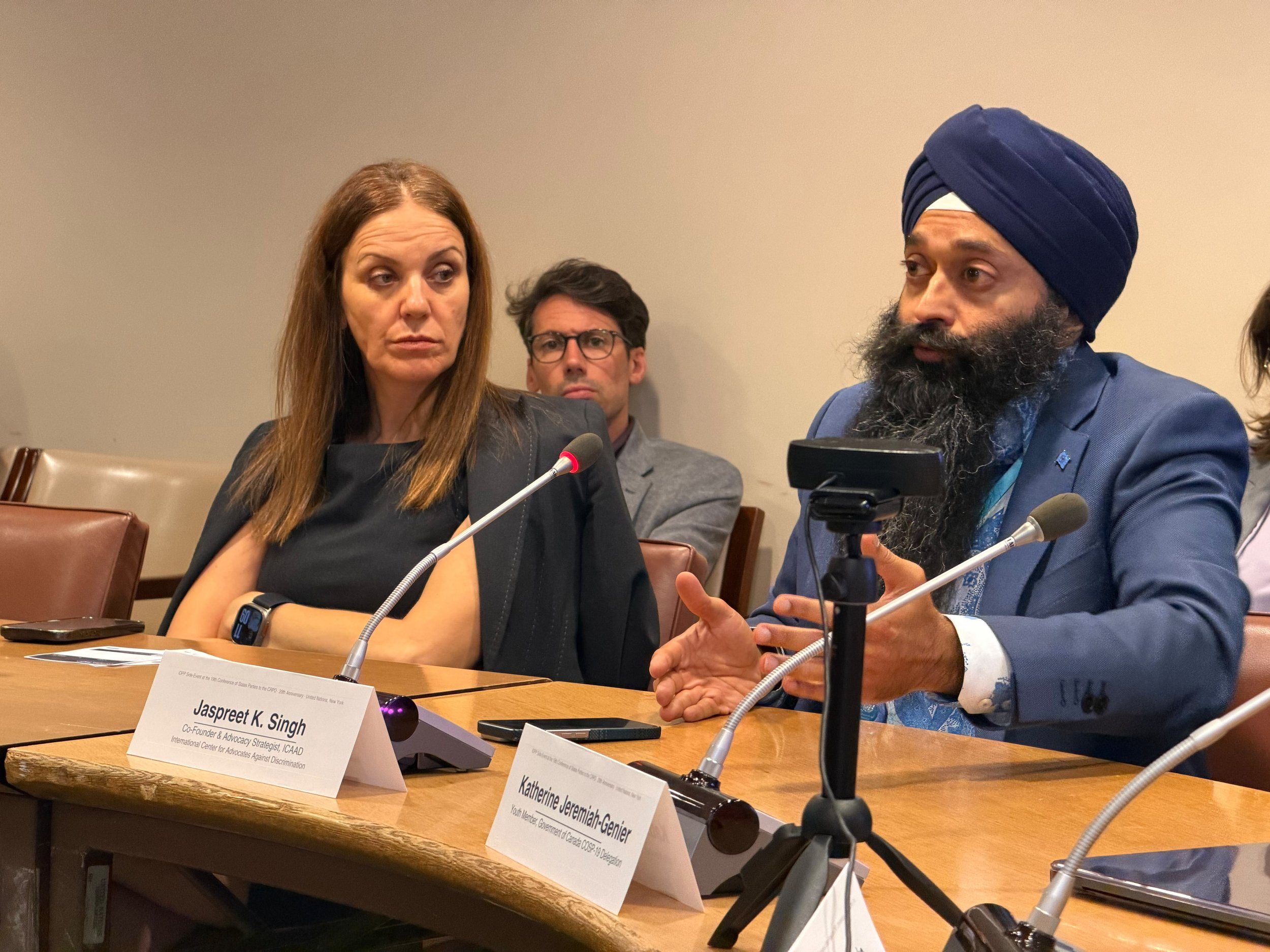
Finally, Topic 5, “Extending the Framework: AI, Treaty Bodies, Community Advocacy,” was presented by Jaspreet K. Singh, Co-Founder & Advocacy Strategist at the International Center for Advocates Against Discrimination (ICAAD). He discussed leveraging AI to identify judicial bias in GBV cases and promote legislative and judicial reforms locally, illustrating how AI-driven data tools can help communities turn monitoring efforts into tangible local impacts on treaty bodies and human rights issues.
Dr. Victor Santiago Pineda, Founder and Executive Director, World Enabled; Executive Director, Center for Independent Living; Board Member, Save the Children; and Chair, International Advisory Board, Institute on Disability and Public Policy (IDPP), American University closed the session. He emphasized how data-driven tools can advance accessible civic engagement, strengthen disability representation, and support monitoring of the CRPD and related global human rights frameworks.
Professor Cogburn made closing remarks and encouraged the audience to access the various dashboards and databases presented during the side event.
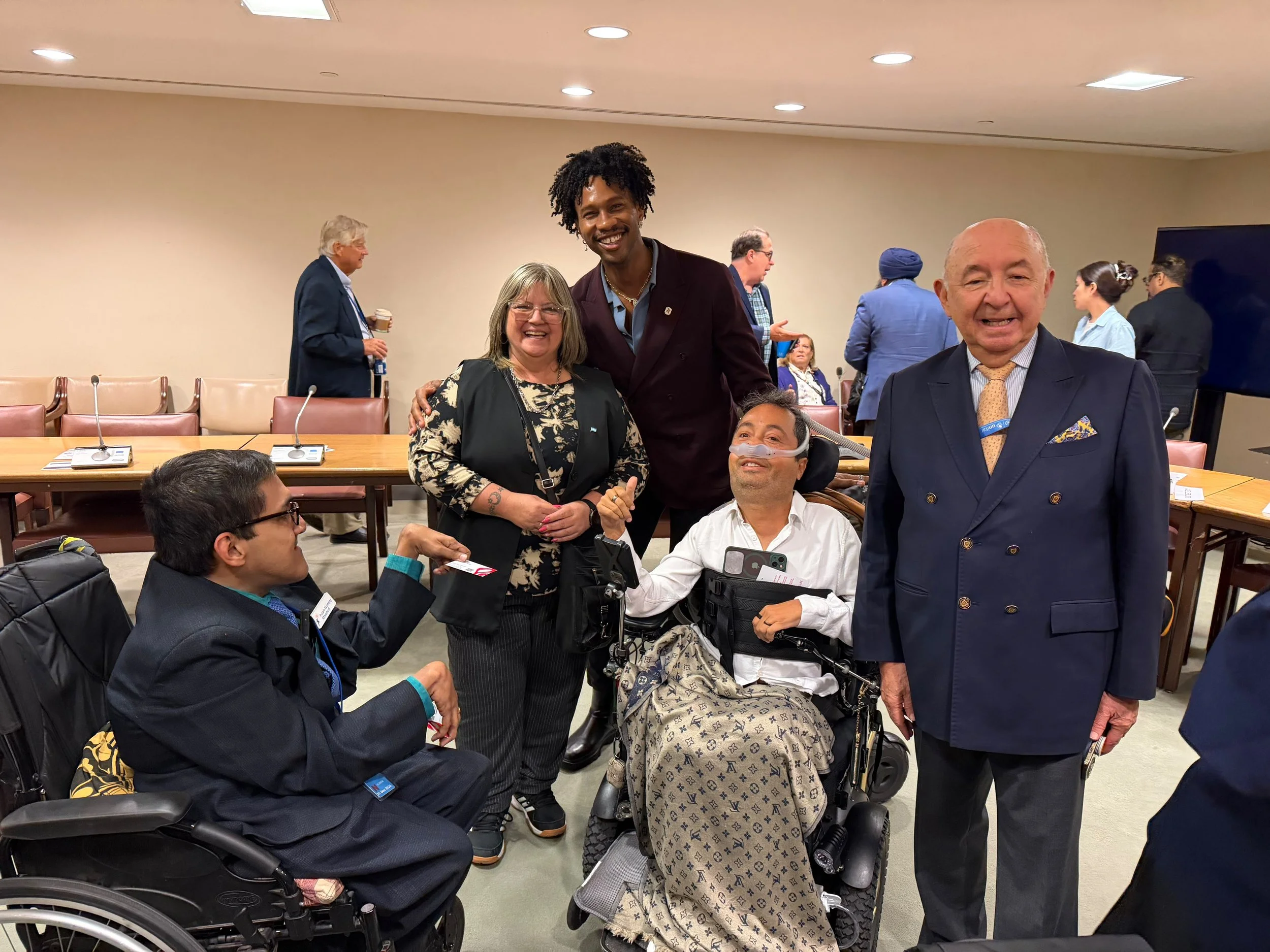
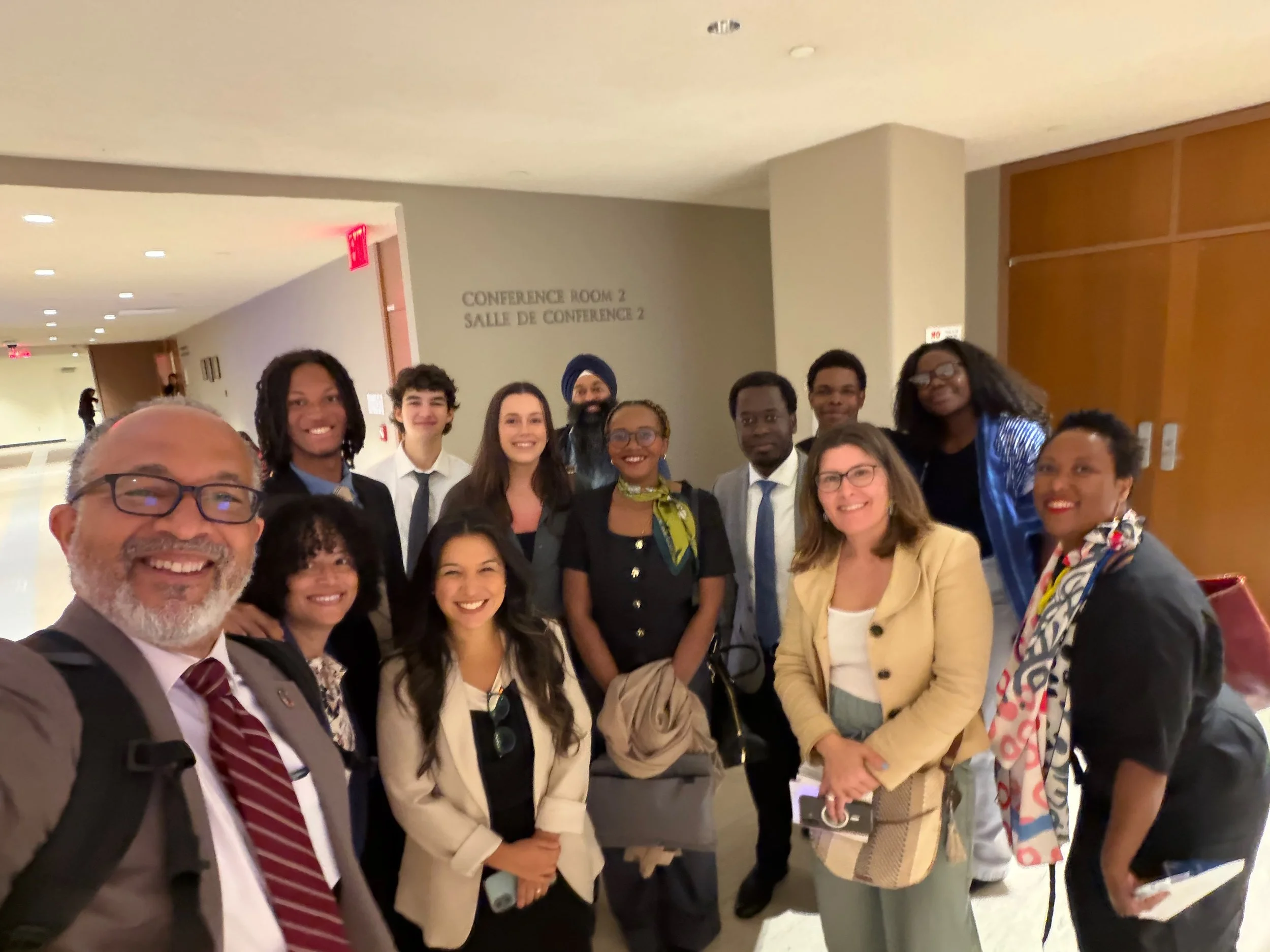
A few photos from the event and afterward are below.